Tag Archives: worth

BASEBALL CARDS NET WORTH

The Value and Net Worth of Baseball Cards

Baseball cards have been around since the late 1800s and early 1900s, with some of the earliest examples being printed on tobacco cards or trade cards inserted into cigarette and candy packages. Over time, baseball cards evolved into their own dedicated collectible hobby and some examples from the early days are now worth millions of dollars. Determining the value and net worth of any given baseball card can depend on several factors, but with rare and historic cards, their value has skyrocketed over the decades.

The biggest factors that influence a baseball card’s value are its age, condition, player featured, and any special attributes like autographs or rare variations. The older the card, generally the more valuable as there are far fewer surviving examples from the early printing era. Topps is considered the most prestigious brand and issues from the 1950s onward tend to command the highest prices. Rookie cards, especially for all-time great players, also hold significant value given they represent capturing a player at the very start of their career.

One of the most expensive baseball cards ever sold is the 1909-11 T206 Honus Wagner card, considered the rarest and most coveted in the hobby. In excellent condition, examples have sold for over $3 million, with the highest being $6.6 million in 2016. What makes the Wagner so unique is that the Pittsburgh Pirates shortstop reportedly asked the American Tobacco Company to withdraw his card from production, making only a small number believed to exist today. Other early 20th century tobacco era cards that can fetch over $1 million include rare examples of Nap Lajoie, Joe Jackson, and Cy Young cards.

Moving into the post-WWII era, the most valuable vintage cards are typically from the 1950s. Mickey Mantle is a perennial favorite and his 1952 Topps rookie card has sold for over $2.8 million. Other seven-figure cards from this decade include the iconic 1955 Sandy Koufax rookie ($1.32 million) and the 1959 Bobby Avila rookie (over $1 million). The 1960s saw the rise of superstar players like Willie Mays, who has high value rookie and classic cards that have reached the $500,000-700,000 range depending on condition.

In the 1970s, collectibles started to really boom in popularity with the rise of direct marketing. The most valuable ’70s card is typically cited as the 1975 Frank Robinson rookie which has topped $400,000 at auction. The late ’70s also heralded a “Golden Age” of card design like the famous 1979 Cal Ripken Jr. and Thurman Munson rookies worth $100,000-150,000 graded mint. By the 1980s, the junk wax era flooded the market with mass-produced cards and drove down values for the bulk of commons. Select rookie cards for all-timers like Ken Griffey Jr. (1989 Upper Deck) and Chipper Jones (1991 Leaf) have reached $350,000-400,000 in pristine condition.

Moving into modern times, the early 1990s Upper Deck Griffey rookie remains highly sought after at $150,000-200,000 graded mint. Iconic 1990s rookies like the 1992 Bowman Derek Jeter ($200,000) and 1993 SP Derek Jeter ($125,000) also hold their value. In the 2000s, cards like the 2001 Bowman Chrome Miguel Cabrera rookie ($75,000) and 2003 Bowman Chrome Albert Pujols rookie ($50,000) demonstrated staying power. The 2010s saw new stars emerge, but few commons from the past 20 years have gained significant value outside of serial numbered parallels and autographs. Overall condition remains paramount, with high-grade vintage cards often appreciating the most over time based on their increasing rarity.

For investors, the baseball card market has proven to be a relatively stable and rewarding alternative asset class. While individual cards will rise and fall based on the fortunes of that player or team, a diversified portfolio of high-quality vintage cards from the pre-1970s era in particular has historically outpaced inflation. With each passing year, as more examples succumb to the elements and fewer pristine specimens remain, the dwindling supply drives up prices for survivors. For unique one-of-a-kind cards, there is also potential for immense upside if a major collector desires that specific piece. As a longtime and time-tested collectible, blue-chip baseball cards can provide portfolio diversification and potentially lucrative long-term returns for savvy investors.

The value and net worth potential of any given baseball card depends greatly on its age, condition, player significance, and special attributes. While common modern issues have little intrinsic value, the rarest and highest graded examples from the early 20th century tobacco era through the 1950s in particular have achieved million-dollar prices. Select rookie cards and iconic designs from the 1960s-1980s also show strong appreciation over decades. For investors, a diversified portfolio of carefully curated vintage cards presents an alternative investment class with a long track record of stable returns. With each passing year, as the surviving population shrinks, the financial value placed on the best examples of cardboard history continues its steady rise.
BASEBALL CARDS FROM THE 70S WORTH MONEY

The 1970s were a transformative time for baseball cards. After decades of being included as incentives in packs of gum and cigarettes, baseball cards started to be viewed as collectible items in their own right. This led to changes in design, production quality, and the types of players and teams featured. It also meant certain 1970s-era baseball cards have increased greatly in value over the years.

Some key factors that can determine the potential value of a 1970s baseball card include the player featured, the player’s career accomplishments both at the time the card was printed and since then, the scarcity or rarity of the specific card variation, and the card’s physical condition. Of course, demand from collectors is also a major driver of value. By exploring some of the most valuable and desirable 1970s baseball cards based on these qualities, we can understand what attributes to look for if searching old collections or card shops for hidden gems worth money.

One of the most iconic and valuable 1970s rookie cards is the 1975 Nolan Ryan issued by Topps. At the time, Ryan was already establishing himself as a fireballing strikeout pitcher but had not yet cemented his Hall of Fame career. His rookie card, featuring him with the California Angels, has increased exponentially in value since. A pristine near-mint condition PSA 10 graded example recently sold at auction for over $100,000, while even well-worn copies in poor condition can fetch thousands.

Another highly sought after rookie card is the 1979 Ken Griffey Jr. issued when he was with the Montreal Expos organization before debuting with the Seattle Mariners the following season. Griffey would go on to have a legendary career and is widely considered one of the greatest players of all time. High grade copies of his rookie in PSA 10 condition have sold for over $10,000. Even worn copies still command prices well into the hundreds due to Griffey’s popularity and the card’s scarcity.

Rookie cards are not the only 1970s cards that can hold big value. Stars who had already established themselves by the mid to late 1970s but have since become icons of the game command high prices as well. A standout example is the 1975 Hank Aaron issued during his final season with the Milwaukee Brewers before retiring as baseball’s all-time home run king. PSA 10 examples have sold for upwards of $50,000. The card is especially desirable since it captures Aaron at the twilight of his incredible career.

Team and league leader subset cards can also be quite valuable depending on the player featured. A perfect example is the 1977 Topps N.L. Batting Average Leader card of Joe Morgan, who hit .327 that season. High graded copies have sold for over $10,000 due to Morgan’s Hall of Fame career and the rarity of a league leader subset card. Another coveted subset is the 1974 Topps All-Star subset, with the Rod Carew and Reggie Jackson cards in top condition commanding $1,000+ prices.

Beyond rookies and stars, error cards from the 1970s have also gained significant collector interest due to their unusual nature. One example is the 1975 Topps error card of Dick Allen, which features an inverted image. Only a small number are believed to exist, and high grade copies have sold for thousands. Other valuable error variations include miscut, missing signature, or missing statistics cards. These anomalies make for very scarce collecting pieces.

Of course, the condition and grade of any given 1970s baseball card plays a huge role in its potential value. While even worn low-grade copies of the above mentioned cards can still sell in the hundreds, obtaining a mint condition PSA 10 or BGS 9.5 example exponentially increases the card’s worth. For example, a PSA 8 graded 1975 Nolan Ryan rookie might sell for $3,000-5,000, but a pristine PSA 10 of the same card could fetch over $100,000. Condition is absolutely vital when assessing a 1970s card’s collectible potential and return on investment if ever sold.

Understanding the players, teams, sets, and specific card variations that were especially desirable and scarce in the 1970s allows collectors to identify hidden gems in old collections that could be worth serious money today. While the odds of finding a true blockbuster card are slim, plenty of 1970s issues have appreciated greatly and hold values well into the hundreds or low thousands even in worn condition for the right players and situations. For avid collectors, carefully examining 1970s collections with an eye for these valuable qualities presents opportunities to potentially uncover surprising finds worth far more than their original production cost.

BUYERS FOR VINTAGE BASEBALL CARDS IN DALLAS FORT WORTH

The Dallas-Fort Worth metroplex is home to a thriving collectibles market, and vintage baseball cards are no exception. With two major league teams located in the area and a strong baseball culture, there is no shortage of collectors and dealers. For sellers looking to unload prized pieces of their collection or find vintage baseball cards to build their own collection, here are some of the top buyers to consider in the DFW area:

Legacy Collectibles – Located in Plano, Legacy Collectibles is one of the largest and most well-established card shops in North Texas. Owned and operated by lifelong collector Charles Baker, the store offers a massive inventory of vintage cards from the 1800s up to the modern era. Baker and his team of buyers are always on the lookout for key vintage cards to add to their stock. They pay competitively for high-end vintage cards in Near Mint to Mint condition, especially for cards of Texas-based players, stars from the 1950s-1970s, and complete vintage sets. Sellers can expect a fair assessment and immediate payment when working with Legacy Collectibles.

Game Time Collectibles – Operating out of their flagship location in Arlington, Game Time is another major buyer and seller of vintage baseball cards. Owners Matt and Dan have built an impressive online presence to go along with their brick and mortar shop. They have an extensive want list of vintage cards on their website and are always willing to make offers, either via phone, email, or in-person. Game Time prides themselves on quick payment and transparent grading assessments. They have a special interest in vintage rookie cards, especially for Hall of Famers, as well as complete vintage sets from the pre-war era through the 1970s.

Card Shack – Run by the knowledgeable and friendly Brian Sweeney, Card Shack is a mainstay in the Denton card collecting community. While their inventory is focused more on modern cards, Brian has developed strong relationships with local collectors and is always looking to acquire vintage baseball gems to sell to serious collectors across the country. He pays competitively for high-end vintage singles and sets in top condition. Brian’s personal collection expertise and fair pricing make him a trusted buyer in North Texas. Meetups can be arranged at his Denton shop or card shows around the area.

Dugout Deals – Operated online and at local shows by dealer duo Matt Weber and Zack Donahue, Dugout Deals cuts out the traditional brick and mortar overhead to offer competitive prices. They have a strong social media presence on platforms like Instagram where they regularly post their extensive want lists. Matt and Zack will travel within reason to inspect and purchase collections. While they can’t match the shop displays of their competitors, Dugout Deals offers fair pricing, quick payment, and significant expertise in vintage baseball cards from the pre-war era through the late 1980s.

Dallas Vintage Cards – Run by father-son team Randy and Tyler Wilson out of their home-based business, Dallas Vintage Cards focuses solely on vintage baseball cards from the early 1900s up to the late 1970s. While a smaller operation than the major shops, Randy and Tyler have decades of collecting expertise and an encyclopedic knowledge of the vintage card market. They are always eager to view local collections, either with scheduled home visits or at card shows in the area on weekends. Payment is quick once a fair price is agreed upon. The Wilsons have an extensive want list with an emphasis on high-grade vintage stars, rookie cards, and complete vintage sets.

Collectors Corner – Operating out of Grapevine, Collectors Corner is a mainstay in the DFW vintage sports collecting scene. Owners Jim and Steve have been in the business for over 30 years and their shop features an impressive inventory of vintage baseball cards available for purchase. They also actively buy collections and are always looking to acquire new inventory. Jim and Steve have a keen eye for condition and will work with sellers at their shop or make house calls within reason. Payment is usually immediate once a mutually agreed upon price is settled on. Collectors Corner specializes in vintage stars, rookie cards, and complete vintage sets.

While these represent some of the top buyers for vintage baseball cards in the DFW area, there are many other local collectors, dealers, and shops that are always on the lookout to acquire new inventory. Sellers should also keep an eye out for major card shows that take place regularly in the metroplex, such as at market halls, convention centers, and hotel ballrooms on weekends. These events attract dozens of dealers and are a great opportunity to shop collections to multiple buyers at once. With its large population and strong collector base, the Dallas-Fort Worth area ensures there will always be ample demand for prized vintage baseball cards. Sellers need only do their research to find a trusted buyer and get a fair price for their vintage gems.

OLD TOPPS BASEBALL CARDS WORTH

If you have any old Topps baseball cards sitting in a box in your attic or basement, it might be time to dig them out and take a closer look. Some vintage Topps cards from the 1950s and 1960s can be worth significant money today, especially if they are in good condition. Topps revolutionized the trading card industry when they started producing baseball cards in the early 1950s, and certain cards from those early series are highly sought after by collectors. Let’s take a look at some of the most valuable old Topps baseball cards you’ll want to watch out for.

The crown jewel of all vintage Topps baseball cards is the 1952 Topps Mickey Mantle card. In pristine mint condition, a 1952 Mantle rookie card can sell for over $2 million. Even well-worn copies in just average condition can still fetch five figures. Mantle went on to become one of the greatest switch-hitting sluggers of all time and is still considered an icon of baseball royalty. His 1952 Topps rookie is the poster boy for valuable vintage cards. Other coveted 50s rookie cards include the 1957 Topps Hank Aaron ($250k+ mint), 1955 Topps Willie Mays ($200k+), and 1957 Topps Rocky Colavito ($75k+).

The 1960 Topps Mickey Mantle is also very valuable in high grade, as it captured Mantle in his prime years leading the Yankee Dynasty. A PSA 10 Gem Mint 1960 Mantle sold for nearly $400,000 in recent years. The 1960 Topps Roger Maris card featuring his historic 61 home run season surpassed $100,000 for the first time in 2020. Rookies like the 1968 Topps Nolan Ryan, 1965 Topps Sandy Koufax, and even a 1970s rookie card of an unknown 23-year old George Brett could sell for six figures in mint condition as well.

Series 1 from 1952, 1957, and 1967 are the “big three” flagships that produced some legendary rookie cards. But other early Topps sets hold value too depending on the player and card condition. A collection of complete commons from the 1954, 1955, or 1958 Topps sets graded high could conceivably sell for tens of thousands as condition is key. The 1956 Topps complete set featuring Mickey, Mays, and Aaron sold for over $100,000. There are also always standout stars that carry premium value in otherwise “regular” sets. Examples include the 1969 Topps Willie McCovey ($7,500 PSA 9) and 1962 Clemente ($2,000+ PSA 8).

Beyond vintage star rookies and complete sets, there are unique variations and short prints within the standard Topps issues as well. One of the biggest is the fabled 1952 Topps Red Back Mack Jones (#121). Only 10-12 of these with the solid red backing are known to exist in collectors circles. In 2013 one reached the unprecedented price tag of $262,000. Other variations include the well-known 1955 Topps Warren Spahn Inverted Back. There are also unnumbered short prints and rare negative inserts in early Topps which can potentially fetch thousands as well. Even staple star player cards like 1956 Topps Hank Aaron (#38) and 1954 Topps Willie Mays (#97) rise well into five figures in pristine mint condition.

Topps also produced several high value specialty subsets over the years. Notable editions include 1964 Topps Clayton/Pinkie/Gaylord ($10k+), 1961 and 1963 Topps HOF subsets, 1958 Topps Ted Williams All-Star Cards, and 1970 SSP Laughlin variations. Error cards are highly collectible too. An example is the 1964 Topps Koosman spelled “Koozman” misprint going for $5,000 or more graded. Big rookie and star cards from 1967 Topps are also rising tremendously, including a recent PSA 9 Roberto Clemente sale of nearly $30,000.

While key stars and vintage rookie cards get the majority of attention, there are often overlooked high value sleepers in the ‘60s and early ‘70s issues as well. The 1969 Topps Nolan Ryan (#526) has reached $3,000 PSA 9. Others like the iconic 1968 Topps Denny McLain (#1), or 1970 Topps Johnny Bench rookie are approaching five figures in top pop report grades. Even though production numbers soared after the ‘60s, it doesn’t mean condition sensitive star cards from the 1970s on can’t be worth big money. A 1975 Topps Eddie Murray rookie in PSA 10 condition sold for nearly $14,000 in 2021.

Whether you have pristine vintage collection holdings or stumble upon old cards while cleaning, it’s always worth researching what any of your old Topps baseball cards could be worth today. Especially issues from the 1950s-60s boom eras when Topps monopoly was at its height. The nostalgia, rarity, and history behind certain star rookies and specialized subsets continue to drive tremendous collector demand and prices upwards for many of these vintage cardboard gems decades later. So take the time to carefully assess what you have – you never know if a valuable forgotten gem could be hiding in the collection!

1970’s BASEBALL CARDS THAT ARE WORTH MONEY

The 1970s was an iconic decade for baseball cards. Stars like Nolan Ryan, Johnny Bench, Reggie Jackson and many more were entering their primes and gaining widespread popularity. As a result, their rookie cards and earlier career cards from the 1970s can be quite valuable today for collectors. While the condition and grade of a card plays a big role in its worth, here are some of the most desirable and financially significant baseball cards from the 1970s:

1973 Topps Nolan Ryan Rookie Card – Ryan’s iconic rookie card from his second season in the majors in 1973 with the California Angels is one of the most sought after cards of all time. In near mint to mint condition, examples regularly sell for $20,000 or more. Even in well-worn condition a 1973 Topps Nolan Ryan can still fetch over $1,000. What makes it so desirable is that Ryan went on to have one of the greatest pitching careers ever and was a true legend of the game by the time he retired. Not many other rookie cards can match the history and prestige associated with Nolan Ryan’s.

1975 ToppsReggie Jackson – Known by his nickname “Mr. October”, Reggie Jackson entered Major League Baseball folklore with his legendary home run heroics for the New York Yankees in the 1977 World Series. His formidable rookie season was in 1968 but his earliest notable card is his 1975 Topps issue from his playing days with the Baltimore Orioles. High graded versions in mint condition can sell for $4,000-$6,000. Even well-centered but worn copies still trade hands for $500-1000 routinely.

1972 Topps Johnny Bench – Widely considered the best defensive catcher of all-time, Johnny Bench was a 12-time All-Star and two-time National League MVP for the Cincinnati Reds. His iconic ’72 Topps rookie card was issued during his breakout first full season where he blasted 38 home runs and drove in 129 RBIs. Pristine examples with a grade of Mint 9 or Above can earn over $10,000. Near mint to excellent conditioned versions are valued around $3,000-$5,000 still.

1976 Topps Mike Schmidt – ‘The Hammer’ enjoyed one of the greatest careers by a third baseman in baseball history with the Philadelphia Phillies. His rookie season in the majors was in 1972 but his true breakthrough year was in 1976 where he launched 38 homers and won the National League MVP award. Near mint to mint conditioned ’76 Topps Schmidt rookie cards sell in the $3,000-$4,000 range today.

1974 Topps George Brett – Considered the greatest third baseman in Kansas City Royals franchise history, George Brett had a 24-year career filled with accolades in the majors. His rookie card issued by Topps in 1974 from his debut season captures him in his early Kansas City days. High graded versions with a PSA/BGS grade of 9 or 10 can sell for upwards of $5,000. Even well-centered examples in Excellent to Near Mint condition still hold value of $1,000-$2,000.

1971 Topps Thurman Munson – As the heart and soul of some of the great New York Yankees teams in the 1970s, Thurman Munson was a tough, competitive catcher who led by example. His 1971 Topps card from his first full season starting is one of the more scarce early issue Yankees cards. Pristine Mint 9’s can sell in the $2,000 range with Near Mint 8’s going for $1,000-1500. He tragically passed away in 1979 at the young age of 32, adding to the historical significance of his early career cards.

1974 Topps Hank Aaron – In 1974 Hank Aaron had just broken Babe Ruth’s all-time home run record and was in the latter stages of his Hall of Fame career with the Atlanta Braves. Topps captured his milestone moment with a memorable action photo on his ’74 card. High graded Mint and Gem Mint examples can earn over $3,000 today. Even well-centered near mint copies are valued around $500-1000 for collectors looking to own a piece of sports history.

1977 Topps Steve Garvey – As the smooth-swinging first baseman for the Los Angeles Dodgers dynasty of the 1970s-early 80s, Steve Garvey was a perennial All-Star and won the 1974 National League MVP award. His 1977 Topps card shows him in the prime of his successful career. Pristine GEM MT 10’s can earn $500-1000 while Near Mint to Mint specimens are valued closer to $200-500 range. It’s an iconic Dodgers card from that golden era.

1978 Topps Ron Guidry – ‘Louisiana Lightning’ had a breakout 1977 season winning the American League Cy Young award with New York Yankees. Topps duly featured him prominently in their 1978 set during his superstar campaign. Pristine high graded examples have sold for $600-800. Even well-centered near mint copies possess value of $200-400 for 70s Yankees fans.

While condition is critical, seasoned collectors understand that premium vintage cards like these from stars’ early careers in the 1970s offer an historical and nostalgic connection to some of baseball’s most legendary players that transcends their dollar value alone. With the decades of appreciation since their original issue, investors speculate they may continue rising much like the larger-than-life players featured forever immortalized them decades ago on cardboard.

1990 SCORE BASEBALL CARDS WORTH MONEY

The 1990 Score baseball card set has produced several valuable and sought after cards over the past 30 years. The 1990 Score set was the flagship baseball card offering from Scoreboard, Inc. that year and featured 762 total cards including rookie cards, stars, and Hall of Famers. While it didn’t receive the hype of sets like 1989 Upper Deck or 1990 Topps at the time, some 1990 Score cards have proven to be excellent long term investments. Let’s take a deeper look at some of the standout 1990 Score cards that hold significant value today.

Perhaps the most coveted and expensive 1990 Score card is the Ken Griffey Jr. rookie card. Griffey was already a star in 1990 after winning rookie of the year honors the prior season, but his rookie card from Score took on a special mythic status over the years. With its bright yellow and teal border design along with Griffey’s boyish smile, the card became iconic for collectors of his generation. In pristine mint condition, the Griffey Jr. rookie now regularly sells for well over $1000 and there is often big competition when graded gem mint examples cross the auction block. The card saw a huge spike in demand after Griffey’s election to the Hall of Fame in 2016 and remains one of the most historically significant rookie cards in the sport.

Another hugely valuable Score rookie is the Edgar Martinez card. Martinez quietly put together a Hall of Fame career primarily as the Seattle Mariners designated hitter, but his offensive prowess was often overshadowed on the national stage. His rookie card was largely overlooked for many years but has gained more attention from collectors as Martinez’s stats and accomplishments have become better appreciated. High grade versions of the Martinez 1990 Score rookie can sell for $500 or more today. What’s interesting is that the smaller printed Score set is now often a more affordable option for collectors chasing this rookie compared to counterparts from larger mainstream ’90 releases.

Rookie cards of Jeff Bagwell and Larry Walker also hold substantial value from the ’90 Score set, routinely selling in the $200-300 range for top conditioned copies. Both went on to have outstanding careers and are recognized as two of the better all-around players of the ’90s, making their rookie cards quite sought after today.

Veteran star cards are no slouch either from this Score release. Ken Griffey Sr.’s career encompassed four different decades but collectors still desire his highly pictorial 1990 card where he is pictured from a low vantage point taking an aggressive swing in the batter’s box. Well preserved copies in the neighborhood of $75-100 can be found.

A personal favorite bargain from the set is the 1990 Score Kirby Puckett card. Puckett made six All-Star teams in the ’80s for the Twins and was in the prime of his career in 1990 when this card was issued. Despite his name recognition, the Puckett remains very affordable even in mint condition at $10-15. It features a closeup portrait of “Puck” with an intense, determined glare that really captures his competitive fire – a great card for the price.

Rickey Henderson also has a visually appealing 1990 Score issue where he is diving headfirst into a base. “Hendu” was arguably the best pure thief in baseball history and his electrifying style of play translated perfectly to cards from this era. High grade copies regularly sell for $50-75.

Looking beyond rookies and stars, one of the bigger under-the-radar gems from the ’90 Score checklist is a card featuring Dodgers pitcher Ramon Martinez. The card pictures Ramon in a partial underarm windup with an intense facial expression. Graded mint copies have increased in value significantly in recent years to $75-100 now. Martinez’s career statistics may not jump off the page but this card has great nostalgia and eye appeal that collectors really respond to.

Lastly, two other relatively affordable key cards in the set are the Nolan Ryan ($20-30) and Cal Ripken Jr. ($15-25) issues—both depicting the future Hall of Famers in classic action player poses. Ryan was still actively overpowering hitters as a 43-year old in 1990 while Ripken was in the midst of setting the MLB record for consecutive games played. Their vintage stars power and mystique translate well to the collectibles market even after all these years.

While it may not have the glitz of some other ’90s releases, the 1990 Score baseball card set holds its own in terms of valuable vintage cardboard, specifically rookie sensations like Griffey Jr. and Martinez. With vivid photography, designs still holding up today, and heavy-hitting names both young and old, this set remains an appealing option for investors and enthusiasts of the era. With patience and a watchful eye on trends, hidden gems like the Ramon Martinez can also be unearthed within the checklist at affordable prices. The 1990 Score maintains an authenticity and iconic energy that keeps collectors coming back after all this time.

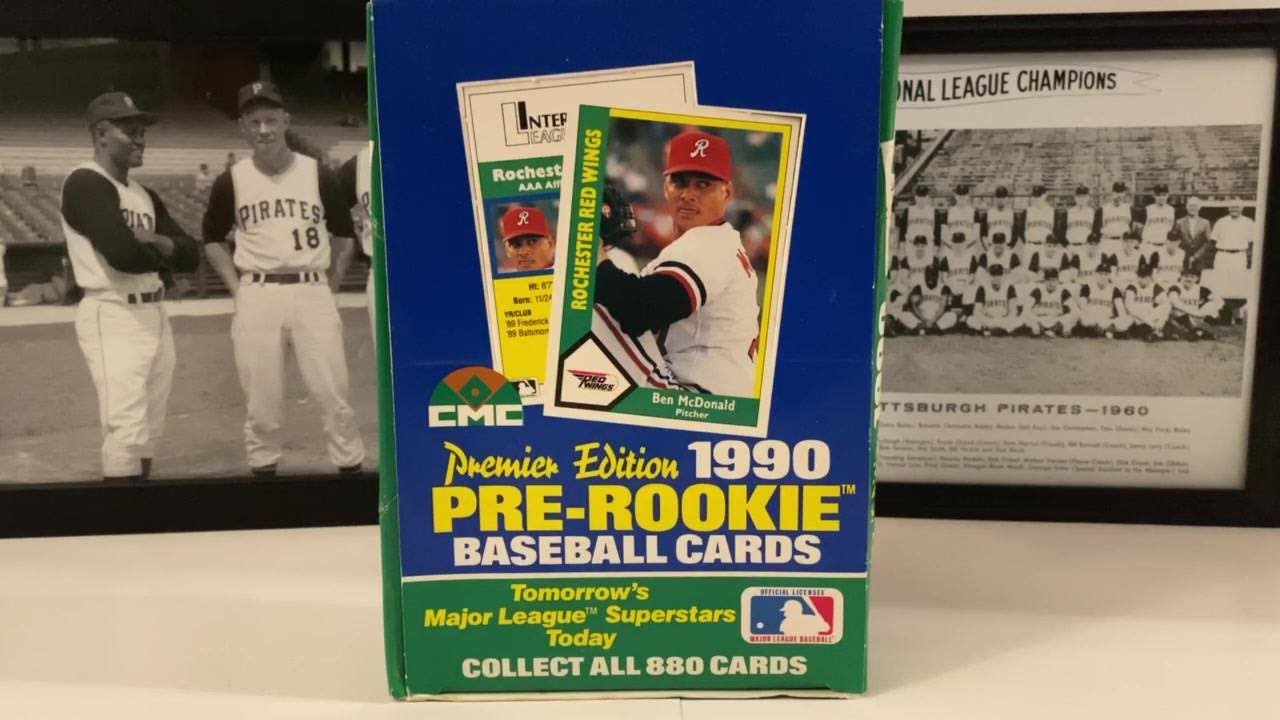
1990 PRE ROOKIE BASEBALL CARDS WORTH MONEY

The 1990 baseball card season marked the beginning of careers for many all-time great players. While they were only prospects at the time of these early cards, some key pre-rookie cards from 1990 can hold significant value for collectors today depending on the player and the card’s condition. Let’s take a closer look at some of the more valuable 1990 pre-rookie cards collectors may want to be on the lookout for.

Frank Thomas (1990 Fleer Rookie Recognition #15): Frank Thomas is considered one of the best right-handed hitters of all time. His dominance began immediately as a rookie in 1991 where he finished second in AL MVP voting. This 1990 Fleer card, which shows Thomas in a White Sox batting stance, carries a Beckett NM-MT 7 value of $60 alone. A PSA 10 Gem Mint version of this key Frank Thomas pre-rookie card recently sold for over $1,000 showing there is big upside potential for high grade examples.

Chipper Jones (1990 Bowman #234): Drafted #1 overall in the 1990 MLB Draft by the Atlanta Braves, Chipper Jones went on to have a Hall of Fame career largely spent with the Braves. He was ROY in 1995 and NL MVP in 1999. This 1990 Bowman card shows Jones as a prospect in a Braves batting stance. PSA 10 Gems recently sold in the $500 range while PSA 9s bring over $100, demonstrating this to be one of the more valuable 1990 pre-rooke cards.

Derek Jeter (1990 Bowman #156): As arguably the greatest Yankee of all time and surefire Hall of Famer, Derek Jeter’s early 1990 Bowman card is a must-have for collectors. This card features a teenage Jeter in a Turnstile Grady uniform. PSA 10 Gems have sold for over $3,000 in recent years while PSA 9s still pull in several hundred dollars. Jeter’s star power and pedigree make this one of the crown jewels for 1990 pre-rookie cards.

Kenny Lofton (1990 Bowman #648): Kenny Lofton carved out a 17-year career as a speedy center fielder who was a key member of several contending teams. He showed star potential early as evidenced by this 1990 Bowman card showing Lofton suited up for the Houston Astros organization before being traded. PSA 10s have sold for $500+ in recent years with PSA 9s bringing $100-200.

Jim Thome (1990 Bowman #91): Often lost among the stars of the 1990s was Jim Thome, one of the most powerful right-handed hitters ever. This early 1990 Bowman card shows Thome as a young power prospect in the White Sox system.gem PSA 10 versions have topped $400 at auction recently, with PSA 9s trading at $100-150 as well, indicating strong collector demand for one of the game’s true 500+ home run legends.

Curt Schilling (1990 Bowman #643): “Bloody Sock” Curt Schilling emerged as one of the most dominant postseason pitchers ever during his career largely with the Diamondbacks and Red Sox. This pre-rookie card shows him in an Expos uniform. PSA 10 copies have reached $400 while PSA 9s trade around $150.

Greg Maddux (1990 Bowman Update #22): Considered one of the best pitching performances ever, Greg Maddux piled up 355 career wins and 4 Cy Young Awards. This early 1990 Update card features Maddux as a youngster in the Cubs system. PSA 10s have brought as much as $500 in recent sales with PSA 9s in the $150-250 range, impressive for a pre-rookie card of a legend.

Gary Sheffield (1990 Bowman #674): “Sheff” forged a 22-year career as a feared power hitter and 5-time All-Star, 3-time Silver Slugger winner during which he smacked 509 home runs. This Bowman card exhibits Sheffield’s tools prior to debuting for the Brewers in 1988. High grade PSA 10s have sold for around $300.

Sandy Alomar Jr. (1990 Donruss #153): Though overshadowed by bigger star contemporaries, Sandy Alomar Jr. enjoyed a long, productive career primarily with the Indians where he was a 6x All-Star and valuable catcher/DH. PSA 10s of this pre-rookie card have cleared $150, showing Collector interest remains for more solid role players as well.

Armando Reynoso (1990 Fleer Update #U-53): Armando Reynoso never panned out as hoped, but as the #1 international free agent signing of 1990 some collectors chased his rookie cards. High grade PSA 10s have still brought $75-100, not bad for an obscure name today. It showcases the speculative aspect of following cards of highly touted prospects.

Bobby Witt Jr. (1990 Bowman Traded #T94): Son of former MLB pitcher Bobby Witt, young Bobby Jr. generated lots of early buzz as one of the best prep baseball players in the country. Though he topped out in A-ball, some collectors paid over $50 for PSA 10s of this teenage prospect card at the time, showing how prospect fever could drive values.

1990 featured several future Hall of Famers and established stars in their earliest card years as prospects. Keys like Frank Thomas, Chipper Jones, Derek Jeter, Curt Schilling, and Jim Thome pre-rookies from this period have shown impressive returns for high grade PSA/BGS slabs in recent years. Additional solid role players and prospects from 1990 may also hold nostalgic value even if they didn’t pan out. The 1990 pre-rookie class reinforced just how much untapped potential was bursting through the minor leagues and onto baseball’s biggest stage in the coming years ahead.

YouTube player

HIGH VALUE 1990 TOPPS BASEBALL CARDS WORTH MONEY

The 1990 Topps baseball card set is renowned among collectors as one of the most valuable vintage issues due to the all-star talent it features from that era. While some consider the 1986 or 1987 Topps sets to be the height of the junk wax era, the 1990s offered several star rookies and established players whose cards hold significant worth today if in pristine condition. Let’s take an in-depth look at some of the most valuable 1990 Topps cards collectors seek based on their sales data and condition.

Perhaps the most coveted and recognized expensive card from the 1990 set is the Ken Griffey Jr. rookie card. Widely considered one of the best player cards of all time, the Griffey rookie is the undisputed blue-chip card from the issue. PSA 10 Gem Mint examples routinely sell for well over $10,000 due to Griffey’s status as a true five-tool superstar and fan favorite during his career. Even lower graded copies in PSA 8 or 9 condition still command prices in the thousands. The pristine rookie card artwork and Griffey’s bright future added to this card’s investment grade collectibility over the decades.

Another very valuable rookie card is Frank Thomas’ debut. Like Griffey, “The Big Hurt” went on to have a Hall of Fame career and his first Topps card holds substantial value as a result. PSA 10 Thomas rookies have sold for upwards of $6,000, showing he is the clear second tier of prospect behind Griffey in the 1990 set. PSA 9 grades still sell for over $1,000 with demand staying robust decades after the issue date. Thomas was a force right away and predictions were that he would have monster stats, so savvy collectors have long recognized this card’s blue chip potential.

For vintage collectors, Nolan Ryan’s final season action shot rookie card in this set also earns very respectable prices. While not technically a rookie, it was the Hall of Famer’s final Topps issue before retirement. PSA 10 examples can sell for $2,500-3,000, underlining Ryan’s popularity and status as perhaps the greatest power pitcher ever. Even raw or lower graded copies still attract strong bids north of $500 on auction markets. His dominance and durability made this final card very desirable for any Ryan PC.

Additional star cards that hold four-figure values in Gem Mint condition from the 1990 Topps set include Barry Bonds, Roger Clemens, Greg Maddux, Tom Glavine, and Wade Boggs. All were established superstars or future Hall of Famers at that point. Near-perfect copies graded PSA 10 often sell in the $1,500-$3,000 range depending on player and market conditions. Their hallmarks of consistency, longevity, and feats made each a blue-chip investment for collectors seeking truly valuable 90s baseball memorabilia.

For Cubs fans, a PSA 10 graded example of Ryne Sandberg’s card can reach $1,000. The smooth-swinging second baseman was still in his prime and considered one of the league’s best at the position. Even PSA 9s command $400-500 prices. Sandberg was hugely popular in Chicago and his skill made this a solidly collectible issue. Fellow October-tested veteran Ozzie Smith’s 1990 card also earns north of $800 PSA 10 due to his flashy defensive wizardry and likeability in St. Louis.

Other high value hits from 1990 Topps if in pristine condition include Darryl Strawberry ($800 PSA 10), Dwight Gooden ($700), Ricky Henderson ($650), Dave Steib ($600), and Will Clark ($500). Each was an impact performer on contending teams that year. Steib’s solid stats and All-Star recognition made him a sought-after rookie. Demand comes from both teams fans and investors pursuing the scarcest mint condition specimens from the 660-card set.

While not reaching the heights of Griffey or Thomas rookies, Scott Cooper and Robb Nen debuted in 1990 Topps with cards now worth $300-400 graded perfectly. Nen eventually turned into a lights-out reliever, while Cooper had some career successes. Still, their obscurity and low print runs have given each card becoming scarcity value for dedicated completionists. Other lessheralded but useful role players like Ed Taubensee and Al Leiter have PSA 10s occasionally selling around $200-250 due to rarity despite modest careers.

The 1990 Topps baseball card set maintains tremendous interest from collectors decades post-production due to the all-time talents it features. Cards of young stars Griffey, Thomas, and Bonds dominate discussions of the issue’s most valuable cards. But solid support also exists for veteran icons like Ryan, Boggs, and Henderson along with key contributors to playoff clubs. Patience and care have made pristine specimens of these icons very worthwhile longterm keepsakes or investments for dedicated collectors pursuing the scarcest treasures from the junk wax era.

1996 FLEER BASEBALL CARDS WORTH MONEY

The 1996 Fleer baseball card set has produced several valuable and collectible cards over the years that are worth significant money for collectors. The 1996 Fleer set featured a variety of stars from the mid-1990s as well baseball legends in their rookie cards. Let’s take a look at some of the top 1996 Fleer baseball cards that can hold solid value for collectors.

Perhaps the most coveted and valuable card from the 1996 Fleer set is the Ken Griffey Jr. rookie card. Griffey was already an established star by 1996 but his rookie card remained in high demand. With his sweet left-handed swing and effortless athleticism in center field, Griffey was already beloved by fans. His rookie card from the Upper Deck set in 1989 is one of the most iconic in the history of the sport. But his rookie card from the 1996 Fleer set also retains strong collector interest. In gem mint condition, a Griffey Jr. 1996 Fleer rookie card can sell for well over $1000. Even in good condition, it is likely worth a few hundred dollars.

Another legendary rookie card worth noting from the 1996 Fleer set is Derek Jeter’s. As the Captain and face of the Yankees dynasty for two decades, Jeter is assured a spot in the Baseball Hall of Fame someday. His rookie cards have always held high value and the 1996 Fleer version is no exception. In top near-mint or gem mint condition, you could expect to fetch $800-1500 for a Jeter rookie depending on the exact grade. Like Griffey, it remains highly sought after by collectors even 25 years later.

Staying with Yankees, the 1996 Fleer set included the rookie card of a player who would become one of the game’s all-time home run kings – Bernie Williams. A gifted five-tool player and star center fielder, Williams slugged over 300 home runs for New York in a stellar career. His rookie card doesn’t quite carry the same stratospheric prices as Jeter or Griffey but it still has notable value, fetching $150-300 in top condition.

Beyond rookie cards of future stars, the 1996 Fleer set featured several talented players who were already established names by then. One such card is Ken Caminiti’s. In 1996, Caminiti was coming off winning the NL MVP award the previous season while leading the Houston Astros. He also won a World Series title that year. His 1996 Fleer card usually sells for $30-75 depending on condition, with the more expensive price tag going to pristine, graded gems.

Another star third baseman featured was Chipper Jones, who was just beginning to emerge as a perennial All-Star for the Atlanta Braves. By 1996, Jones had two 100 RBI seasons under his belt and would go on to a Hall of Fame career. High-grade copies of his 1996 Fleer card can reach $75-150 depending on buyer interest. As one of the best right-handed hitters of his generation, Jones cards from the mid-90s hold appeal.

For Pittsburgh Pirates fans, the 1996 Fleer set included one of their franchise icons – Barry Bonds. In his playing days with the Pirates and then Giants, Bonds ascended to being perhaps the greatest pure hitter in baseball history. His 1996 Fleer card captured him during his walk year with the Bucs before leaving in free agency. Near-mint to gem mint examples can sell between $40-100. Bonds remains a polarizing figure but his talent can’t be denied.

Beyond star position players, the 1996 Fleer set also highlighted top pitchers of the era. For example, Greg Maddux’s card is quite valuable in top condition. As one of the best control artists and most cerebral hurlers ever, Maddux was a huge sensation in the 1990s. His 1996 Fleer card reaches $80-150 price range when fresh and flawless. Atlanta Braves fans enjoyed his dominance for many years.

Another ace pitcher whose card brings healthy returns is John Smoltz. One of the greatest power pitchers alongside his pinpoint control, Smoltz terrorized hitters throughout the 1990s and early 2000s. His 1996 Fleer card finds buyers willing to spend $60-150 based on demand and condition grading scale. With over 200 career wins and 150 saves, Smoltz made history as an elite starter and closer.

While not quite reaching the allure and profit potential of the premier 1989 Fleer set, the 1996 Fleer baseball card collection nevertheless features investments that can pay dividends for collectors today. Rookie cards of future Hall of Famers like Griffey, Jeter and Chipper Jones drive the strongest current values. But stars cards of talent in their primes like Maddux, Smoltz and Caminiti also carry worthwhile secondary market prices. For fans of the great players and teams of the 1996 season, this Fleer production remains a treasured part of baseball card history. With care and the right grade, it can grow in monetary worth too.

1987 BASEBALL CARDS THAT ARE WORTH MONEY

The 1987 baseball card set holds quite a few gems that can be worth significant money depending on the player, card number, and condition. The 1980s were the golden era of baseball cards when production numbers were high but interest and demand remained strong. Let’s take a look at some of the top 1987 baseball cards that old-time collectors are seeking out and are still bringing hefty prices at auction today over 30 years later.

One of the most coveted and valuable 1987 cards is the Ken Griffey Jr. rookie card. Griffey was one of the most hyped young prospects to enter Major League Baseball in decades and “The Kid” lived up to expectations with a stellar career. His rookie card from the 1987 Topps set is the true Holy Grail card from that year. In near-mint to mint condition, Griffey rookie cards have sold for over $400 at auction. Higher graded versions in the PSA 9-10 range can sell for thousands of dollars. Even well-worn copies still fetch over $100 due to enduring interest in Griffey’s rookie season.

Another highly sought after rookie card is Mark McGwire from the 1987 Topps set. Like Griffey, McGwire’s raw power potential was apparent from an early age and he went on to smash the single-season home run record. PSA 9-10 graded versions of his rookie sell in the $400-600 range. Even lower graded copies still sell for $100-300 depending on condition details. McGwire is forever etched in baseball history and collectors are still eager to add his rookie to their collections.

While not rookies, some veteran star cards from 1987 hold immense value as well. One of those is the Frank Thomas rookie star card from 1987 Topps. Thomas would not officially debut until 1990 but he was already making waves in the minors in 1987. His rookie star card sells for around $200-300 in top condition. Another veteran pickup is the Nolan Ryan card from 1987 Topps. Ryan was already a living legend by 1987 after piling up milestones but collectors still love his cards from the era. A PSA 9 Nolan Ryan fetches around $150-200.

Moving over to 1987 Donruss set, the main rookie draws are Ben McDonald and Barry Larkin. McDonald was a highly-touted Orioles pitching prospect who showed promise during his career. A PSA 10 McDonald rookie recently sold for $400. Larkin on the other hand became a future Hall of Famer and his impeccable skill was on display from the start. High-graded Larkin rookies sell consistently in the $300-500 range. Another star performer was Bo Jackson, who was already making waves in football too before his short but electric MLB career. A PSA 10 Bo Jackson rookie from 1987 Donruss sold for $625 in early 2021.

Condition is king when it comes to maximizing the value of any card from the 1980s era. Yet even in lower grades, certain star players from 1987 still command prices well above the average due to enduring popularity. For example, a PSA 5 Ken Griffey Jr. rookie recently sold for $240 while a PSA 5 Mark McGwire went for $130. Of course, mid-range graded versions in the PSA 6-8 range sell proportionately higher, usually landing in the $150-300 range depending on card centering, corners and edges.

The 1987 Topps Traded set also has a few gems including rookie cards. One is the PSA 10 graded version of Ellis Burks rookie that is routinely worth $150-200. Even lesser condition Burks rookies sell for over $75. Another rising star was Lenny Dykstra who became a fan favorite during his career. His 1987 Topps Traded rookie in PSA 10 grade has sold for as much as $350 in recent auctions. The set also featured rookie call-ups for Ruben Sierra ($100 PSA 10), Devon White ($150 PSA 10) and Scott Cooper who wasn’t a star but the card still holds value in top grades.

Overall condition is extremely important when considering the values from over 30 years ago. PSA and BGS slabs with grades of 9-10 exponentially increase worth but even lesser grades retain appeal and value due to the star power of certain players. Storage matters too as cards kept in attics and basements tend to show more wear over time versus those placed carefully in binders. But regardless of condition details, securing a Griffey, McGwire, Bo Jackson or an underrated star like Ellis Burks rookie still proves a worthwhile addition to any collection from the bountiful 1987 card year. Prices remain high and interest stays strong for these ’80s cardboard icons.

The 1987 baseball card season has provided collectors with many valuable and sought after pieces of cardboard over the decades. Rookie sensations like Ken Griffey Jr. and Mark McGwire obviously top the chart due to their all-time careers. But others like Bo Jackson and Ellis Burks also hold lasting appeal. Factor in star veterans and comeback players too which add notable value depending on grading scale. Condition is critical but even well-loved, worn copies still retain monetary worth. For nostalgia and investment purposes, prominent 1987 rookies and stars deserve a home in any vintage collection.