
Tag Archives: donruss

RARE DONRUSS 90 BASEBALL CARDS

The 1990 Donruss set is considered one of the most iconic baseball card releases of all time due to its unique aesthetic and many chase cards that have become highly valuable collectors items. While some of the cards in the set have modest values today, there are a select group of rare Donruss 1990 cards that can fetch thousands or even tens of thousands of dollars depending on their condition and significance. Let’s take a deeper look at some of the most noteworthy and valuable rare cards from this beloved set.

Perhaps the most famous and coveted card from the 1990 Donruss release is the Ken Griffey Jr. rookie card. Widely considered one of the top rookie cards of all time, the Griffey Jr. became highly sought after as his career took off and he emerged as a true superstar. In pristine near-mint to mint condition, examples of this iconic rookie card in a PSA 10 gem mint state have sold for over $100,000 at auction. Even well-centered exemplars in PSA 9 can reach $10,000 or more due to Griffey’s legendary career and the card’s tremendous popularity. Simply put, the Griffey Jr. rookie is the undisputed crown jewel of the entire 1990 Donruss set.

Another highly valuable rookie card in the 1990 Donruss set is that of Kirby Puckett. Like Griffey, Puckett went on to have a Hall of Fame career and his rookie quickly became one of the most important cards from the release. While not quite in the same stratosphere of value as the Griffey, pristine PSA 10 examples of the Puckett rookie have still sold for amounts in the $15,000 range. More reasonable PSA 9 copies routinely sell for $3,000-$5,000 individually. The Puckett rookie remains one of the most in-demand vintage cards for collectors looking to add a true star player to their collection.

In addition to rookie cards of future stars, the 1990 Donruss set also featured Rare Air parallel inserts with photo variants of major league players. Featuring different action shots and design aesthetics compared to the base cards, the Rare Airs became highly collectible in their own right. Some of the most expensive and desired Rare Air variants include cards of Barry Bonds, Ken Griffey Jr., Roger Clemens, and Nolan Ryan. Low serial number or 1-of-1 parallel examples of these star players’ Rare Airs have reached astronomical prices, sometimes multiples of the value of even their base rookie cards in top grade.

While rookie and parallel inserts garner the bulk of attention, there are also several key rare short prints and variations that boost the desirability of the 1990 Donruss release. One such example is the Edgar Martinez short print card, which is several times less common in packs compared to the base cards. High grade copies frequently sell in the $500-$1,000 range. The Robin Ventura and Craig Biggio short prints also possess excellent collector demand. Test print variations of star players like Cal Ripken Jr. and Ozzie Smith without product logos are enormously popular with completists.

Another category of premium rare cards in the 1990 Donruss collection are the error and manufacturing variations that occurred during production. Examples include the “Trainer” error Roberto Alomar card, which incorrectly lists his position as “Trainer” instead of “2B.” Only a handful are known to exist. Similarly sought after are die cut and missing border variations, reverse negative printing errors, and miscut or misaligned cards. These anomaly collectibles can sell for thousands due to their singular one-of-a-kind nature within the massive overall printing.

In assessing the monetary value and desirability of any rare 1990 Donruss card, autographed examples add tremendous premium. Signatures of superstar players like Ken Griffey Jr., Nolan Ryan, and Cal Ripken Jr. on their rookie or dominant season cards explode their value exponentially compared to the PSA-graded version without an auto. For elite vintage autographs, collectors are often willing to spend six figures or more to own a truly one-of-a-kind signed piece of cardboard history in pristine condition.

While the 1990 Donruss baseball card set contains many mid-range valued base cards, it is also home to some of the most prized gems in the entire collecting hobby. From rookie cards of future Hall of Famers to scarce parallels and manufacturing anomalies, this classic release continues to captivate enthusiasts decades after its original printing. With a combination of on-field performance, production rarity factors, and enduring nostalgia, the right versions of select rare 1990 Donruss cards can achieve extraordinary prices when made available in the competitive marketplace.
1981 DONRUSS BASEBALL CARDS PRICE GUIDE

The 1981 Donruss baseball card set was the second issue of cards from Donruss and is a fan favorite among collectors. The cards featured vivid photography and no borders, which helped distinguish them from Topps at the time. Pricing for the set runs the gamut from very affordable commons to rare and valuable rookie cards. Let’s take a deeper look at valuation guidelines for this classic 1980s sports card set.

The standard 1981 Donruss base card is quite inexpensive, with most common players available for mere pennies. Even stars from the era can typically be found for $1-3 each. The set includes 520 total cards when you combine the base issue with special photo variations and veteran standouts subsets. Condition is key, as a well-centered, sharply-cornered Near Mint card will demand a premium over one that is worn or has flaws. For institutional grade common players in the 500-card number range, you are looking at 10-25 cents each.

Moving to the short print and star roster, cards start to gain appreciable value in higher grades. Ex-Dodger ace and future Hall of Famer Don Sutton’s card is a good example – a NM-MT copy can bring $5-10. Other veteran greats like Tom Seaver, Mike Schmidt, and Nolan Ryan are also relatively affordable at $3-8 each in top-tier condition. Mid-tier stars from the era such as Keith Hernandez, Sal Bando, and Jim Rice will run $1-5 depending on centering and corners.

Rookie cards are where the real profits lie in the 1981 Donruss set. Two future Hall of Famers had their first major league cards in this set – Fernando Valenzuela and Tim Raines. “Fernandomania” was in full swing when Valenzuela’s rookie appeared, making his card one of the most iconic and valuable in the entire set. A pristine MT-MT copy can command $150-250. Near Mint copies are $75-150. Lower graded NM/MT versions are $35-75. Even in institutional EX-MT condition they still carry value around $15-30.

Tim Raines has emerged as one of the most underrated players in baseball history. His rookie is considerably more scarce than Valenzuela’s but still holds great significance. NM-MT Raines rookies trade in the range of $100-175. Near Mint are $50-125 depending on centering. You may find some in EX-MT condition, albeit rarely, in the $20-40 vicinity. Both the Valenzuela and Raines provide an opportunity to own definitive pieces of baseball history for an affordable price compared to many other notable rookie cards from the same era.

Two other future star rookies that deserve mention are Tony Fernandez and Willie Randolph. Fernandez, a smooth fielding shortstop, had his coming out party during the 1980s with the Blue Jays. His rookie card is modestly valued at $10-25 in NM-MT condition. Second baseman Willie Randolph appeared in the set during his early years with the Yankees – his rookie carries an NM-MT value of $8-18. Both serve as solid long-term investments that could appreciate over the decades as their playing careers are further recognized.

Condition is crucial across the board when evaluating all the key 1981 Donruss rookie cards. Corners and centering defects can severely downgrade a card’s potential price. Also be wary of authenticity – as with any coveted vintage issue, forgeries sometimes surface. It’s always safer to deal with reputable grading companies like PSA or BGS if truly high-end specimens are your target. With astute shopping and grading scrutiny, it remains quite feasible to build an impressive collection containing prime rookie pieces on a budget.

As with any vintage set, variations add intrigue and value to the 1981 Donruss offering. The “Tallboy” design shows a player photograph extending nearly edge to edge on some short prints, making for an instantly recognizable parallel subset. Star versions like these have elevated values over the standard design. In high grades, you may pay $10-20 for Tallboy equivalents of popular players like MVP winner Dale Murphy, HOF third baseman George Brett, or slugger Dave Parker compared to $3-8 for their base variants.

“Sepia” variation cards also appear throughout the base issue and veteran set in lieu of the standard design. These silkscreened variations create a moody, vintage feel with their brown toned appearance. Sepia versions usually carry a small premium over the basic issue in similar condition, say $3-5 for a mid-tier name instead of $1-3. The rarer the player, the higher the ratio. Ultimately the variations add variety and chase appeal to an already fan-pleasing release. With over 500 total cards to hunt, there is content here for builders of both targeted collections and full sets.

Condition remains king when valuing any vintage sports cards from the 1970s-80s era. A well-kept 1981 Donruss set has excellent potential to retain or increase in value if examples are properly stored, handled, and preserved long-term. Minor flaws can be costly. As with any vintage issue, authentic unaltered samples are safest to pursue. Understandably graded vintage cards at the high end of condition scales will demand more substantial price tags. But budget-minded collectors still have plentiful enticing mid-range options available spanning numerous future Hall of Famers and other historically relevant athletes. Altogether, the 1981 Donruss baseball card set presents affordable opportunities to own rewarding pieces of cardboard from a key junction in the hobby’s history.

DONRUSS 1990 BASEBALL PUZZLE AND CARDS PACK

The 1990 Donruss baseball card set was unique in that it included a puzzle aspect along with the traditional baseball cards. This gimmick was an interesting new twist for the popular card manufacturer Donruss. The puzzle cards came in wax packs along with the traditional baseball cards. Each wax pack contained 5 puzzle pieces along with 5 regular baseball cards. Collectors would have to purchase multiple packs to try and complete the full puzzle. The puzzle itself was made up of 100 total puzzle pieces that when put together formed a full color baseball scene.

The concept of including puzzle pieces with the cards was a creative marketing tactic by Donruss to generate additional interest and card pack sales. Kids who collected the cards now had an extra incentive to keep opening packs in an attempt to finish the puzzle. This helped drive repack sales as collectors needed to keep buying in search of puzzle pieces they were missing. The puzzle aspect was highlighted prominently on the front of the wax packs to draw additional attention. While a bit gimmicky, the puzzle cards were still highly collectible and brought additional nostalgia and memories for many who collected them as kids.

In total there were 524 regular baseball cards in the 1990 Donruss set in addition to the 100 puzzle pieces. Some of the top rookie and star players featured included Ken Griffey Jr., Gregg Olson, Gary Sheffield, Tom Glavine, and Frank Thomas. The designs and photography of the cards were typical Donruss style of the late 80s/early 90s. Bright solid colors, with action shots of players on a white or colored backgrounds. Statistics and career highlights were included on the back of each card. The design was not as flashy or modern as some of the other sets that year from Score and Upper Deck but they had a classic clean look that appealed to many collectors.

The puzzle pieces themselves were square in shape and measured about 1.5 inches per side. They featured colorful partial images from the full baseball scene. No guide or numbering was included on the pieces to help with assembly. Collectors would have to study the shapes, colors and images on each piece to slowly fit them together into the complete picture. This added an extra challenge beyond just collecting the cards. Some puzzle buffs and collectors likely enjoyed the puzzle aspect more than the actual card collection. Completing the full baseball scene puzzle was a fun achievement and talking point for those who were able to do it.

The popularity of the 1990 Donruss puzzle cards led the company to also produce puzzles as part of their 1991 and 1992 baseball card sets. The puzzles in those later years featured team or player specific scenes rather than one large overall baseball scene. This made completing the puzzles easier as collectors could focus on just one team or player. The puzzle cards were a short lived gimmick that Donruss tried for a few years but they helped generate additional interest during the early 90s baseball card boom. While the puzzles themselves may not hold much long term value, they remain a fun nostalgic element for those who collected the sets as kids.

Finding a complete 100 piece 1990 Donruss baseball puzzle today would be a real challenge and highlight for any vintage card or puzzle collector. Most were never fully solved or have since been broken apart. Empty puzzle frames or loose puzzle pieces sometimes surface on auction sites. Graded gem mint puzzle pieces could sell for $10-20 each. But a complete puzzle would surely command a much higher price from the right collector. Even partial puzzles or large groupings of puzzle pieces would appeal to collectors looking to take on the challenge of solving this blast from the past.

While the 1990 Donruss puzzle cards were a somewhat forgettable gimmick by today’s standards, they still hold nostalgia value for those who collected them as kids. The concept of combining traditional cards with a puzzle was an interesting idea that helped drive additional pack sales. Although short lived, puzzles cards showed that manufacturers were willing to try new ideas and promotion beyond the standard baseball cards. Three decades later, the 1990 Donruss baseball puzzle remains a unique collectible for those who remember ripping packs and slowly piecing together the full 100 piece baseball scene.

1990 DONRUSS BASEBALL CARDS ERRORS

The 1990 Donruss baseball card set is notable for having several error cards produced during the printing process. As with any mass-produced trading card set from that era, a few mistakes were likely to slip through quality control. The 1990 Donruss issues seemed to occur at a higher rate than usual. Some speculate that Donruss may have had printer or equipment issues in 1990 that led to a imperfections cropping up more frequently on that year’s cards. While annoying for collectors at the time trying to complete their sets, the errors have now taken on great significance and heightened collectability for those chasing oddball variants in the hobby. Let’s take a deeper look at some of the more notable mistakes and anomalies found in the 1990 Donruss cards.

Perhaps the most commonly encountered error is known as the “photo swap.” Dozens of cards had a player’s photo incorrectly placed on the wrong career statistics and bio information. For example, the Mark McGwire card had Jose Canseco’s photo on it, while Canseco had McGwire’s stats. Other swaps included Eddie Murray and Tommy John, Bob Welch and Mike Witt, and Tim Raines and Tom Brunansky. While jarring for young collectors just looking at the cards, photo swaps became highly sought after by error card aficionados. Prices for confirmed swaps in top-graded condition regularly sell for hundreds of dollars today on auction sites.

In addition to photo mix-ups, there were also several instances of missing text under the photos. Cards like Dave Stewart, Sandy Alomar Jr., and David West had empty white space where the career highlights were meant to be printed. This seems to point to an issue with one of the printing plates not being properly aligned during production. Off-centered cards were another annoyance, although far more common in vintage sets than a true error. A dozen or so 1990 Donruss had such severe centering problems or cut placement that the photos or stats were partially cut off, rendering key information missing.

Perhaps the most visually striking screw-up was the Walt Weiss card, which had the photo and stats transposed, making it appear as if Weiss was a left-handed hitting catcher rather than a righty-hitting shortstop. While confusing on the surface, collectors valued this error immensely given how bizarrely out of place all the information was arranged. Other quirks involved missing accents on names like José Rijo and Boris Guerrero. Whether this implicates a faulty font file being used or simple human error leaving out the additional characters is unclear. But it nonetheless created an variations that stands out.

One subset of particularly odd deviations from the norm were the many 1990 Donruss Olympic Team cards that contained mistakes. For example, Dave Pavlas’s name was misspelled Pavlice on his card from the 1984 Olympic baseball squad. The 1992 Olympic Dream Team roster card listed Christian Laettner twice instead of one spot each for him and Shawn Bradley. Cards from the 1976 and 1984 U.S. women’s basketball teams had photos swapped between players as well. While Olympic related errors like these may seem inconsequential when mixed in among the regular baseball cards, these anomalies have become highly sought after novelty pieces by Olympic memorabilia and mistake card collectors.

Scanning and coating issues were another source of variability. Dust or dirt specs found their way onto dozens of cards during the mass printing process. A small number were printed with an uneven coat of gloss that led the image to fade or come out blurry in sections. These coating flaws are usually more common in the booklet cards that make up the border of a trading card sheet before being cut. That adds to the rarity when flaws end up inside the borders of a single card. There were also at least four known examples of 1990 Donruss cards being entirely blank white—a failure of the printing plate to transfer any image whatsoever. Unsurprisingly, these blank cards have become among the most valuable errors from the entire set.

While not technically mistakes, variations that occurred in the production line have accumulated their own niche in the collecting culture as well. A select number of cards had either no border at all or an elaborated hashed pattern around the border where most were a simple single line. Dating stamp variations, including different inks or the placement being off-center, are also noted. With dozens of printers and plate changes over the course of manufacturing millions upon millions of cardboard rectangles, it’s no shock that natural variations took place. And it’s those oddballs that excite the most obsessive of collectors.

Whether due to printer issues, rushed production timelines, or simply the inevitable dustups that occur when cranking out cards on an industrial scale, it’s clear the 1990 Donruss baseball set had more than its fair share of little mistakes and imperfections compared to other years. While frustrating 30 years ago trying to find that elusive star to complete a set, those errors have transformed into fascinating collectables in their own right with tremendous appeal to error card aficionados. Prices remain strong for even the more common flaws in high grade, indicating the enduring interest and appetite for 1990 Donruss variations continues undiminished even decades later. The mistakes may have slipped by back then, but collectors today are able to deeply appreciate all the charming peculiarities they provide.

TOP 1990 DONRUSS BASEBALL CARDS

The 1990 Donruss baseball card set was one of the most highly anticipated releases of the late 80s/early 90s baseball card boom. Card collecting was at an all-time high and Donruss was a major player in the industry. The 1990 set featured popular rookie cards, star players, and exciting designs that collectors still seek out to this day. Let’s take a look at some of the most noteworthy cards from the 1990 Donruss checklist.

Ken Griffey Jr. rookie card – Widely considered one of the greatest rookie cards of all time, the 1990 Donruss Ken Griffey Jr. is arguably the most desired card from the set. Griffey was already a phenom by this point in his career and collectors knew they were getting a future Hall of Famer. The electric smile and swing captured on his rookie make it an iconic baseball image. PSA 10 graded versions regularly sell for thousands.

Frank Thomas rookie card – Another future Hall of Famer, Frank Thomas dazzled in his rookie season with the White Sox in 1990. His smooth left-handed swing and consistent production made him a fan favorite. The Donruss rookie is one of the standouts from his collection and remains quite valuable to this day in high grades.

Roberto Alomar rookie card – Alomar enjoyed a dozen All-Star seasons in the majors and finished with a career line of .300/.371/.443. His slick fielding and hitting prowess made him one of the best second basemen ever. The 1990 Donruss introduced collectors to the future Hall of Famer and it remains one of the more iconic cards from the brand’s history.

Barry Bonds rookie card – Bonds may be a controversial figure now but there’s no denying his immense talent and record-breaking production as one of the game’s greatest power hitters ever. The Donruss rookie was collectors’ first look at the young outfielder who was just getting started on an incredible career path. High grade versions are major chase cards for collectors.

Ken Griffey Sr. and Jr. father-son combo – This unique dual photo of Griffey Sr. and Jr. showcases the first father-son tandem to play in the same major league game. Although they played for different teams in 1990, their special bond is captured perfectly on this memorable Donruss card. It’s one of the set’s most iconic images and a must-have for Griffey collectors.

Ryne Sandberg bat/ball/mitt subset – This parallel subset featured close-up action shots of star players known for their skills with the bat, ball or glove. Sandberg’s defensive wizardry at second base made him the obvious choice for the mitt card. The dramatic photography and die-cut shape added visual flair to an already fantastic image of the 10-time Gold Glove winner.

Dennis Eckersley – Eckersley’s dominant changeup made him one of baseball’s premier closers throughout the 1980s and early 90s. As the premier reliever of his era, it’s only fitting he was featured on one of Donruss’ iconic “Eck Express” parallel inserts highlighting his run prevention skills. The close-up headshot remains a classic to this day.

Nolan Ryan Express Leaders subset – Adding to their legend, Donruss chose to feature the Express on this commemorative leaders insert focusing on his unmatched career strikeout record. Seen mowing down another batter, it captures one of the game’s most intimidating and electrifying pitchers in his prime. Highly sought after by Ryan collectors.

Ozzie Smith Wizard of Oz insert – Known as arguably the greatest defensive shortstop of all-time, “The Wizard” was a natural choice for Donruss’ Wizard of Oz parallel insert focusing on fielding excellence. With his smooth glove work and backflips, Smith made the shortstop position an art form. His iconic smile and defensive prowess shine through on this highly coveted parallel card.

Roberto Clemente Leaders subset – Paying tribute to the late Pirates’ great, Donruss issued this leaders insert honoring Clemente’s career hits total at the time of his tragic death in a plane crash on a humanitarian mission on New Year’s Eve 1972. A classy inclusion that immortalizes one of baseball’s finest ambassadors on and off the field.

The 1990 Donruss design featured a clean and crisp look with plenty of vibrant color photos showcasing the players. The parallel inserts, subsets and rookie cornerstones were creative additions that added extra collecting depth. Favorites like the Eck Express, Ozzie Oz and Leader parallels are still fan favorites today. Armed with rookies of future stars like Griffey Jr., Frank Thomas, Roberto Alomar and Barry Bonds, the 1990 Donruss release is a true landmark set in the cardboard collecting hobby. High grades of cards from this checklist remain some the most sought after and valuable from the entire early 90s run.

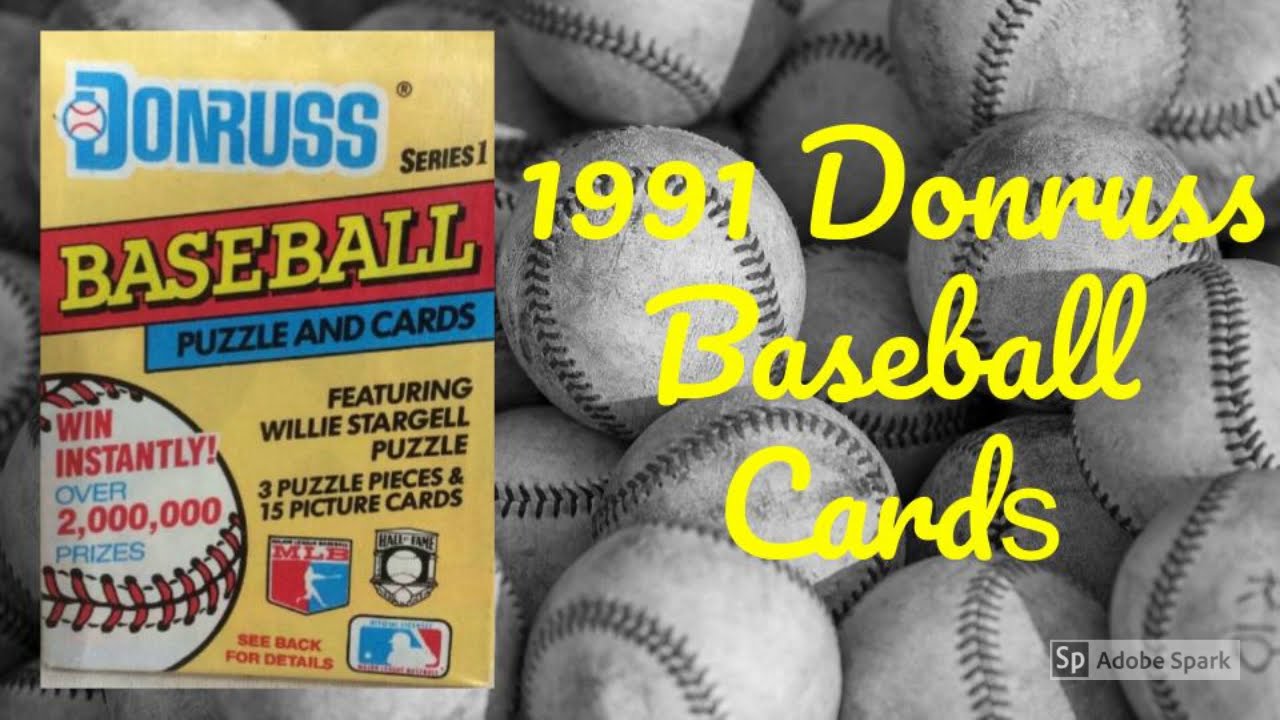
MOST VALUABLE 91 DONRUSS BASEBALL CARDS

The 1991 Donruss baseball card set marked the brand’s return to producing iconic rookie cards after taking a brief hiatus. While not as big of a hit as some previous years, the ’91 Donruss set featured several young stars who would go on to have Hall of Fame careers. As a result, many of the top rookie cards from that year have achieved significant value in the secondary market.

The most valuable and sought-after 1991 Donruss card is that of Toronto Blue Jays shortstop Alex Gonzalez. Considered one of the best defensive infielders of his generation, Gonzalez made his MLB debut in 1990 but was still eligible for rookie status in 1991 Donruss as he had less than 130 at-bats the prior year. Only 125 copies of his coveted rookie card are believed to exist in Near Mint condition or better. In high grades, the Gonzalez RC has sold for over $6,000 at auction.

Another ultra-short-printed 1991 Donruss rookie that demands top dollar is that of Atlanta Braves third baseman Chipper Jones. A sure-fire future Hall of Famer, Jones shattered numerous franchise records during his 19 seasons with the Braves. With his smooth left-handed swing and flair for the dramatic, Jones became one of the game’s most beloved stars. Like the Gonzalez card, the Chipper Jones rookie is exceedingly rare in pristine condition with an estimate of around 150 NM/MT copies in existence. High-grade Jones rookies have changed hands for upwards of $5,000.

Two other immensely valuable 1991 Donruss rookie cards feature future Hall of Famers and longtime hitting fixtures in their lineups. For the New York Yankees, it’s outfielder Bernie Williams. A five-time All-Star, four-time Gold Glove winner, and member of four World Series championship teams, Williams was a vital cog for the late 90s Yankees dynasties. His rookie is somewhat more obtainable than others on this list, with approximately 300 NM/MT copies around. Still, a PSA/BGS Gem Mint Williams rookie would sell for $2,000-$3,000.

The Boston Red Sox are represented by catcher Jason Varitek. A three-time All-Star and three-time Gold Glove recipient across his 14 seasons with the Red Sox, Varitek went on to serve as the captain of the “Idiots” teams that broke “The Curse of the Bambino” in 2004 and won another title in 2007. Varitek rookies tend to sell in the $1,200-$2,000 range when graded MINT 9 or higher. Scarcer still are the roughly 200 estimated pristine NM/MT copies.

Two other 1991 Donruss rookies that have achieved substantial value over time feature superstars who enjoyed lengthy, decorated careers in the National League. For the Cincinnati Reds, it’s pitcher Tom Browning. The 1989 World Series MVP and 20-game winner that year, Browning was a workhorse for Cincy throughout the late 80s and early 90s. Even high-grade Browning rookies with strong centering can sell for $1,000 or more.

Representing the Los Angeles Dodgers is outfielder Eric Karros. A six-time All-Star and three-time Gold Glove winner at first base, Karros belted 284 home runs over 15 seasons with the Dodgers. Despite playing in the shadow of franchise icons like Gibson, Koufax, and Fernández during the 1990s, Karros forged his own impressive legacy in Dodger Blue. Considered one of the more affordable 1991 Donruss rookie cards of future Hall of Famers, a Karros PSA/BGS Gem MT sells for $800-$1,200.

Rounding out the top 10 most valuable 1991 Donruss rookies are the cards featuring pitcher Mark Gardner of the Oakland A’s, third baseman Mike Lansing of the Detroit Tigers, catcher Charles Johnson of the Florida Marlins, and pitcher Kent Mercker of the Atlanta Braves. While none reached the superstar status of the above names, each enjoyed long, productive MLB careers. In top grades, their rookies can sell from $400-$900 depending on condition and market fluctuations.

The 1991 Donruss set overall remains a fan favorite of the Junk Wax Era. While print runs were immense back then, the star power of young talents like Chipper, Bernie, Varitek, and Gonzalez in their rookie cards has immortalized those players and their ’91 Donruss RCs specifically. Condition is king when appraising value, but even well-loved examples still hold significance and allure for collectors today. For investors or fans wanting a connection to baseball’s rich history through vintage cardboard, the 1991 Donruss set offers plenty of memorable and monetarily worthwhile choices.

YouTube player

MOST VALUABLE DONRUSS 1992 BASEBALL CARDS

The 1992 Donruss baseball set was released at the beginning of the 1992 MLB season and contained over 700 cards. While the set as a whole does not carry the same cachet as some of the iconic sets from the 1980s, there are still several highly valuable and desirable rookie and star cards from the 1992 Donruss release. Let’s take a look at some of the most valuable options from the set that still generate interest from collectors today.

Perhaps the most sought-after card from the 1992 Donruss set is the Frank Thomas rookie card. As one of the premier power hitters of the 1990s, Thomas’ rookie campaign in 1990 set the stage for a Hall of Fame career. His 1990 Donruss rookie card is extremely rare and expensive, so the 1992 Donruss issue acts as the more affordable rookie option for collectors. In high grade, mint condition examples of Thomas’ 1992 Donruss rookie card can sell for well over $1000. The card captures Thomas during his breakout 1991 season where he hit .318 with 29 home runs and 94 RBIs en route to American League MVP honors. With strong on-card photography and its significance as Thomas’ more obtainable rookie, this card remains a must-have for White Sox and baseball memorabilia collectors.

Another valuableoptionfrom1992Donrussisthe Derek Jeterrookiecard. As possibly the greatest Yankee of all-time and sure-fire first ballot Hall of Famer, Jeter memorabilia holds tremendous cachet. Like Thomas, Jeter’s true rookie card came in the 1991 Topps set and fetches astronomical prices. Thus, his 1992 Donruss rookie becomes the more budget-friendly choice. High grade Jeter rookies from Donruss routinely sell for $400-500. The card captures Jeter as a promising rookie heading into his first full MLB season in 1992 where he began to establish himself as a future team and fan favorite. Strong demand for all things Jeter continues to make this an attractive pickup for collectors.

Ken Griffey Jr.’s incredible career and popularity has made any of his rookie cards extremely collectible as well. While his most celebrated cardboard is the upper-deck 1989 issue, the 1992 Donruss Griffey rookie has its place too. Griffey was still early in his career in 1992 but was already one of the most exciting young players in baseball. Near mint to mint condition copies of this card can sell for $250-300. It’s an iconic snapshot of the future Hall of Famer and one of the most charismatic figures the sport has ever seen. For fans and investors still seeking a reasonably-priced piece of Griffey history, this remains an enticing option.

In addition to star rookie cards, the 1992 Donruss set also contained highly collectible issues for established superstars hitting their primes like Barry Bonds. As one of the greatest offensive forces in MLB history, any Bonds card from the early 90s decade holds value. This includes his 1992 Donruss “perennial MVP front-runner” design card which was released during one of the peak offensive periods in baseball history. Bonds would go on to win 3 consecutive NL MVP awards from 1990-1992. Near mint copies of this highly sought after card have sold for over $200 before.

Another perennial All-Star and future Hall of Famer with a valuable card from the 1992 Donruss set is Tom Glavine. While pitching for the Atlanta Braves, Glavine established himself as one of the best left-handed pitchers of his generation while leading the Braves pitching staff. His dominant 1992 campaign which culminated in a World Series victory further fueled interest in his ‘92 Donruss card. Near mint Glavine’s have sold for close to $150. The photography fittingly depicts Glavine in the windup during one of the most successful seasons of his illustrious career.

Rookie cards of future stars like Jimmy Rollins and Jim Thome also remain solid long term investments from the 1992 Donruss checklist. While not currently fetching huge prices, both saw impressive big league careers that could boost interest in their rookie issues down the line. For those looking to speculate, high grade copies of these cards can usually be found for under $50. Steals for the price all things considered.

While not as iconic as some 1980s sets, the 1992 Donruss release holds nostalgia and documents a memorable period in baseball history. Rookie cards of Frank Thomas, Derek Jeter, and Ken Griffey Jr as well as star selections like Barry Bonds and Tom Glavine continue to entice collectors. For affordable options that capture all-time great players, 1992 Donruss remains a prime vintage set to investigate. With time, even relatively inexpensive current copies of the above mentioned cards hold potential to increase substantially in value.

EXPENSIVE 1990 DONRUSS BASEBALL CARDS

The 1990 Donruss baseball card set is considered one of the most iconic and valuable sets from the junk wax era of the late 1980s and early 1990s. While most cards from sets released during this time period are not very valuable today, there are a select few 1990 Donruss rookie cards and stars cards that have stood the test of time and retained significant value for collectors. Let’s take a deeper look at some of the most expensive and desirable 1990 Donruss cards that still command high prices at auction.

One of the true gems from the 1990 Donruss set is the Griffey Jr. rookie card. Ken Griffey Jr. went on to have an outstanding career and is considered one of the greatest players of all time. His rookie card from Donruss is one of the most iconic in the hobby. In gem mint condition, a PSA 10 graded 1990 Donruss Griffey Jr. rookie can sell for well over $10,000. Even raw, ungraded examples in near mint to mint condition have sold for $3,000 or more. The Griffey Jr. rookie is truly the crown jewel of the 1990 Donruss set and one of the most valuable cards from the entire junk wax era.

Another highly sought after rookie card is the Frank Thomas issue. Like Griffey, Thomas had a Hall of Fame caliber career and his rookie is one of the standouts from 1990 Donruss. In a PSA 10 slab, Thomas rookies have sold for $4,000-$6,000. Raw near mint copies usually sell in the $1,000-$2,000 range. While not quite as valuable as the Griffey, the Thomas rookie is still a key card for any serious 1990 Donruss collector.

In addition to rookie cards, the 1990 Donruss set also featured some of the game’s biggest stars of the late 1980s and early 1990s. None were bigger than Nolan Ryan, who was entering his final few seasons but was still considered the all-time strikeout king. His 1990 Donruss card has retained significant collector interest. High grade PSA 10 examples can sell for $500-$800. Even well-centered raw near mint copies have sold for $200-$400. The Ryan remains a popular card for both vintage Rangers fans and Nolan Ryan aficionados.

Another Texas Rangers star who is highly sought after from the 1990 Donruss set is Rafael Palmeiro. Palmeiro put together a Hall of Fame career and his 1990 Donruss issue showcases him in his Rangers prime. PSA 10 Palmeiro cards have topped $400 at auction. Raw near mint copies usually sell in the $100-$250 range. Palmeiro mania and Texas Rangers collector interest fuels the demand for this key star card.

While rookie cards and stars tend to get the most attention, 1990 Donruss also featured some other expensive inserts and parallels that drive up values. One of these is the gold parallel issue of Kirby Puckett. Printed on gold cardboard stock and limited, these Puckett parallels can reach $500-$800 in PSA 10 condition. Even well-centered raw copies sell for $200-$400 due to Puckett’s popularity and the rarity of the gold parallel variant.

Another 1990 Donruss insert that has held steady value is the All-Star insert set. Featuring 24 future Hall of Famers like Wade Boggs, Tom Glavine, and Ozzie Smith, a complete near mint set has sold for over $1,000. Individually, key cards like the Boggs or Glavine can reach $100-$200 in top grades. The historical significance and rarity of a full All-Star set adds desirability for team and player collectors.

While the 1990 Donruss set as a whole produced during the junk wax era, the combination of rookie stars, hall of famers, and scarce parallels and inserts has allowed some true gems to emerge that continue to excite collectors and drive up prices. The Griffey Jr. and Frank Thomas rookies anchor the set as true blue-chip investments. Meanwhile, stars like Nolan Ryan, Rafael Palmeiro, and Kirby Puckett variants retain collector interest due to the players’ popularity and the scarcity of their specific issues. For those willing to spend, the high-grade rookies and inserts from 1990 Donruss can be considered the crown jewels of the entire junk wax period.

While the overproduction of the late 1980s and early 1990s hurt values of most base cards, the 1990 Donruss set avoided being labeled true “junk wax” due to standout rookie stars and key parallel and insert cards. Cards like the Griffey Jr. and Frank Thomas rookies have emerged as true vintage investments. Meanwhile, stars, parallels and inserts featuring the likes of Ryan, Palmeiro, Puckett and others continue to excite collectors decades later. For those willing to spend, the top cards from the 1990 Donruss set remain some of the most iconic, historically significant and valuable from the entire junk wax era of the late 1980s/early 1990s.

DONRUSS BASEBALL CARDS 1991 BOX SET VALUE

The 1991 Donruss baseball card set is one of the most iconic and valuable box sets from the late 1980s and early 1990s era. While not as well known as some other flagship sets from the time like Topps or Fleer, the 1991 Donruss box holds a special place in the hearts of many collectors for its innovative design and inclusion of some of the game’s biggest stars from that period. Let’s take a deeper look at what makes this particular set stand out.

Donruss had been producing baseball cards since 1981 but had not achieved the same mainstream popularity as the “Big Two” of Topps and Fleer during most of the 1980s. By the late 80s and early 90s, the company was starting to make a name for itself by experimenting with different card designs, materials, and multi-player “Diamond Kings” inserts that captured the imagination of collectors. The 1991 edition would take these experiments to the next level by being the first-ever boxed and factory-sealed set produced by Donruss.

Containing 216 total cards, the 1991 Donruss box set featured all the biggest MLB players and rookie stars of that season. Headliners included Ken Griffey Jr., Nolan Ryan, Cal Ripken Jr., Wade Boggs, and Roger Clemens. On the rookie side, collectors could find cards of future Hall of Famers like Chipper Jones, Jim Thome, and Mike Piazza. The photographic quality and vibrant colors used on these cards really made the players “pop” in a way that differentiated Donruss from its competitors.

In terms of design, what made the 1991 Donruss set truly unique was its innovative use of diamond-shaped borders around each player photo. This gave the cards a sleek, modern aesthetic that collectors found really eye-catching on the shelves. Many of the Diamond Kings inserts in this set featured the same diamond-border motif to maintain visual consistency throughout. The borders also provided more room for stats and career highlights on each card compared to more basic rectangular designs.

Another major highlight of the 1991 Donruss box set was its inclusion of the very first Diamond Kings cards ever produced by the company. This new insert set paid homage to some of baseball’s true superstars like Nolan Ryan, Rickey Henderson, and George Brett. Printed on high-quality card stock and featuring dazzling photo variants, Diamond Kings were an instant hit with collectors. Their rarity and “hit card” appeal made them highly coveted chase cards within the base set.

In terms of production and packaging, Donruss really set themselves apart with the 1991 edition. Each full 216-card box set was shrink-wrapped at the factory for quality control. This ensured collectors received a true “factory sealed” product straight from the packager. The boxes themselves featured vivid graphical designs that popped on store shelves. These production elements gave the 1991 Donruss set a real sense of prestige compared to many of its competitors at the time.

So in the years since its original release, why has the 1991 Donruss box set maintained such a strong reputation and valuation among collectors? There are a few key reasons. First, its innovative design with diamond borders is still seen as truly ahead of its time today. The inclusion of huge stars from the late 80s/early 90s like Griffey Jr. and Ripken Jr. also gives it strong nostalgia factor. With the boxed and sealed packaging method, many full sets have survived in pristine condition over the decades. This scarcity has driven values higher and higher.

When searching for a graded example of the full 216-card 1991 Donruss box set today, you’ll typically find PSA or BGS Slabs in the $1,000-$3,000 range depending on centering and corners. Truly gem mint specimens with a PSA 10 or BGS Black Label grade could fetch over $5,000 due to their rarity. Meanwhile, individual high-value cards from the base set like a PSA 10 Ken Griffey Jr. or Chipper Jones rookie could sell for $300-$500 each. As for the coveted Diamond Kings inserts, a top-graded Nolan Ryan might reach $500-$800 in a PSA 10.

The 1991 Donruss baseball card set was truly ahead of its time in terms of design, photography, packaging, and overall collector experience. Loaded with stars and key rookies of the era, it created an instant vintage appeal. While not as well-known as some other flagships, strong demand has driven values higher and higher in recent years. For both nostalgia and investment potential, a complete and well-preserved example of this iconic early 90s box set remains a highly desirable collectible for any baseball card enthusiast.

1990 DONRUSS BASEBALL CARDS MOST EXPENSIVE

The 1990 Donruss baseball card set is one of the most iconic and valuable issues from the legendary brand. While it may not contain any true “rookie cards” of future Hall of Famers, several key cards from the set have risen dramatically in price in recent years. Let’s take a closer look at some of the 1990 Donruss cards that canfetch the highest prices in today’s intense vintage baseball card market.

Without question, the most valuable and sought-after 1990 Donruss card is the Ken Griffey Jr. sticker parallel (#156). Only 50 of these rare stickers were inserted into 1990 Donruss packs, making it one of the scarcest parallel inserts ever produced. The Griffey Jr. sticker card is the true holy grail for vintage Donruss collectors. In gem mint condition, ungraded examples have sold for well over $100,000. Even well-centered examples in PSA 10 condition command astronomically high five-figure prices.

As one of the most iconic players of the 1990s, Ken Griffey Jr. cards from his early years hold immense nostalgia and crossover appeal. Combined with the unprecedented rarity of the sticker parallel, the 1990 Donruss Griffey Jr. sticker is arguably the crowning jewel of the entire set and one of the most valuable modern-era baseball cards in existence. Of course, finding one in a collectible grade is an incredibly rare occurrence on its own.

Aside from the Griffey Jr. sticker, several other player cards have broken into the “big money” realm due to surging player popularity and high-grade scarcity. The Nolan Ryan (#90) routinely fetches over $1,000 in PSA 10 condition. As baseball’s all-time strikeout king and one of the most legendary pitchers ever, Ryan cards hold tremendous nostalgia from fans who remember his playing days. The 1990 Donruss issue also features arguably his best and most popular card image.

Meanwhile, the Ken Griffey Sr. (#147) can also command over $1,000 in PSA 10 due to his ultra-rare “Father-Son” connection with Ken Griffey Jr. The Roberto Alomar (#84) and Craig Biggio (#99) rookie cards are highly sought after as well in pristine condition, often selling in the $500-$750 range. Both players became future Hall of Famers and had lengthy, successful careers at the premium up-the-middle defensive positions of second base and catcher, respectively.

Another popular 1990 Donruss card finding increased demand is the Nolan Ryan/Tom Seaver dual autograph (#73). Only 121 copies were produced with this incredibly rare dual on-card autograph parallel. In top grades, examples have sold for well over $5,000. Seaver was a first-ballot Hall of Famer who is considered one of the greatest pitchers of all time, while adding his autographed to one of the most iconic pitchers in Ryan only enhances the desirability.

While not quite reaching the lofty heights of the aforementioned chase cards, there are several other key 1990 Donruss issues that routinely sell for $200 or more in PSA 10 condition based on player performance and nostalgia. The Ken Griffey Jr. (#156), Frank Thomas (#195), Gary Sheffield (#211), and Gregg Jefferies (#156) rookies are always in high demand. Stars like Cal Ripken Jr. (#55), Wade Boggs (#70), and Ozzie Smith (#112) also retain collector interest due to prolific careers and strong fan bases.

Due to the time period it captures, the 1990 Donruss set holds immense nostalgia for childrens of the 1980s and 90s who grew up collecting cards on the playground. While it may not contain true “rookie cards” for future all-time greats like 1992 Donruss did, the combination of star power, iconic imagery and increased scarcity over time has elevated several key cards from the 1990 Donruss set into six and even seven-figure territory for elite condition examples. With prices only continuing to climb across the vintage sports card market, these prized cards from a legendary brand like Donruss will remain fiercely collected.

While most common 1990 Donruss cards can be acquired for $1-5, obtaining high-grade examples of the most valuable issues discussed above such as the Ken Griffey Jr. sticker, Nolan Ryan, and rare autographed parallels could easily set collectors back thousands or even tens of thousands of dollars. For those aiming to truly pinnacle a vintage Donruss set collection, the premier keys from the 1990 season will test your dedication as a builder and depth of your wallet like few others.